
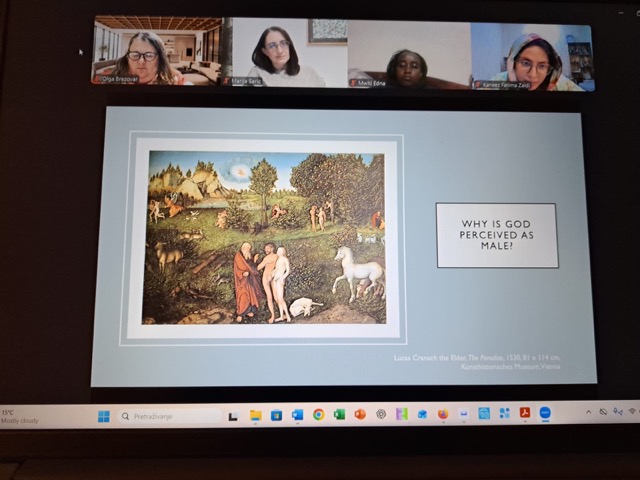
What gender is God? Does God have a sex or gender? How do representations of God shape our understanding of femininity and masculinity, and what social implications do they have for the position of women and men?
These are some of the key questions explored in the course
God, Sex and Gender – Feminist Theology
, offered during the winter semester of the 2026/2027 academic year as part of the FER School – Feminism and Religion. The introductory lecture was delivered by Prof. Dr. Tina Beattie, who addressed fundamental questions concerning the relationship between gender and religion. Subsequent lectures will be delivered by internationally recognized scholars in feminist theology, religious studies, and gender studies.
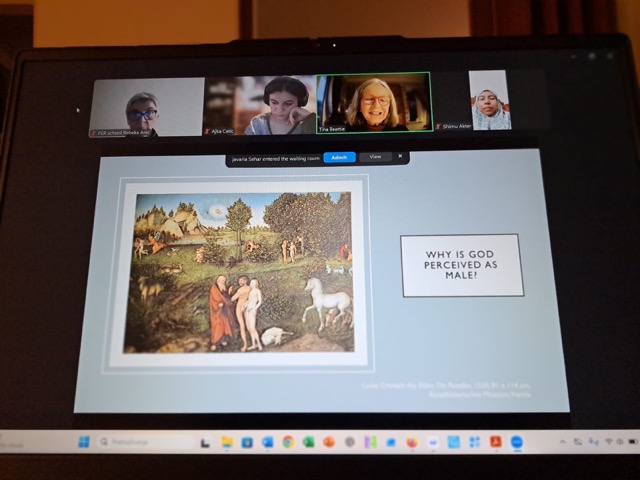
Although God is understood in monotheistic religions as a transcendent being who exists beyond human categories of sex and gender, religious language, symbols, and representations of God are often shaped by masculine imagery and metaphors. Why is God predominantly represented in masculine terms, and how do such representations influence the distribution of power, authority, and social roles between women and men? Can we speak about God beyond binary gender categories, and what can feminist theology and different religious traditions teach us about these questions?
The introductory lecture was delivered by Prof. Dr. Tina Beattie, who presented key issues concerning the relationship between gender and religion, highlighting the importance of feminist approaches in critically re-examining religious traditions, theological interpretations, and social norms.
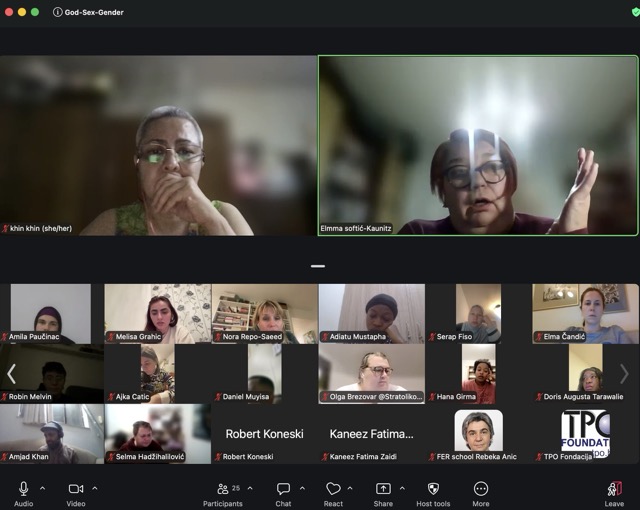
The subsequent lectures will be delivered by Prof. Dr. Zilka Spahić Šiljak, Prof. Dr. Elana Stokzman, Prof. Dr. Selina Palms, Prof. Dr. Anja Zalta, Prof. Dr. Nadja Furlan, and Elma Softić-Kaunitz, MSc. Drawing on diverse religious and feminist perspectives, the lecturers will examine the gender dimensions of theological discourse about God, feminine and masculine metaphors of the divine, the relationship between religious symbolism and social power, and possibilities for rethinking gender within religious traditions.
Particular attention will be devoted to how theological representations become social norms, specifically how certain gender roles come to be presented as natural, unchangeable, or divinely ordained. Feminist theology therefore questions not only how we speak about God but also the implications of such language for human dignity, equality, and freedom.
The course provides a space for interdisciplinary and interreligious dialogue, encouraging participants to critically reflect on inherited interpretations and recognize the emancipatory potential within religious traditions.
For the question of whether God has a gender is not merely a theological one. It is also a question of who has the authority to represent God, speak in God’s name, and determine the place of women and men in society.
