
Faculty
-
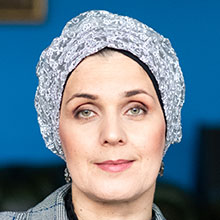 prof.dr. Zilka Spahić Šiljak
Director of the FER School Zilka Spahić Šiljak is a professor of gender studies, and received her doctorate from the University of Novi Sad in 2007. Her areas of expertise include gender, religion, human rights, politics, and peacebuilding, with many years of experience working in the government and non-governmental sectors and academia. From 2011-2019 she worked as a lecturer and researcher at Harvard University and Stanford University in the United States, and before that she led the Religious Studies program at the University of Sarajevo for six years. She is the Director of the TPO Foundation Sarajevo, which deals with issues of education, intercultural dialogue and peacebuilding, and empowering young people and women for leadership. She is a Visiting Professor at the University of Roehampton in London and teaches at the Faculty of Philosophy, University of Zenica. She has published several books and academic papers: LINK: https://www.researchgate.net/profile/Zilka-Spahic-Siljak -
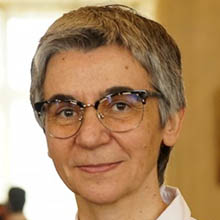 Dr. sc. Jadranka s. Rebeka Anić
Director of the FER School
Dr. sc. Jadranka s. Rebeka Anić is a Franciscan school sister, scientific advisor at the Institute of Social Sciences Ivo Pilar – Regional Center Split. She graduated and received her master’s degree at the Catholic Faculty of Theology in Zagreb, and her doctorate at the Catholic Faculty of Theology, University of Vienna. As an external associate, she taught at the Department of Sociology at the University of Zadar, at the Center for Interdisciplinary Postgraduate Studies (CIPS) at the University of Sarajevo, at the Catholic Faculty of Theology in Split and at the Matija Vlačić Ilirik Faculty of Theology in Zagreb. She was a member of the board of directors of the European Society of Women in Theological Research (ESWTR) and the president and vice-president of the Croatian section of ESWTR. In 2017, the Herbert Haaag Stiftung für Freiheit in der Kirche from Switzerland awarded her a prize for research into gender theories and the anti-gender movement. The main areas of her research are theological anthropology from a gender perspective, the anti-gender movement, violence against women, the role of religion in the lives of the homeless and the elderly. You can see the list of published workshere. -
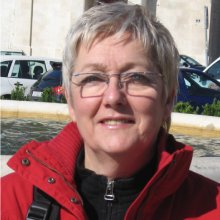 Inga Tomić-Koludrović
Prof. Ph.D. sc. Inga Tomić-Koludrović, professor and researcher emeritus of the University of Zadar and the Ivo Pilar Institute of Social Sciences, received her master’s degree in the sociology of culture at the University of Ljubljana, and her doctorate in the field of lifestyles at the University of Zagreb. Her research interests and publications focus on gender, women, inequalities, youth and modernization. She published 8 books and more than 70 scientific and professional papers. She taught at the graduate, master’s and doctoral levels at the Università degli Studi di Bologna, Università degli Studi di Teramo, Karl-Franzens Universität Graz, University of Zagreb and University of Zadar and Università degli Studi di Teramo. She received recognitions and awards for academic excellence, including the annual state award for the book “Movement towards Modernity: Women in Croatia in the Period of “Mature” Transition” (2016) and the recognition of Rudi Supek of the Croatian Sociological Society for extremely significant achievements, successes and merits for the development of sociology (2019). She led the national sections of several international scientific projects (US Aid, EU FP5, Swiss Science Foundation – SNSF, EU Horizon 2020). She received scientific training as a Fulbright scholarship holder at prestigious American universities (Massachusetts Institute of Technology and Boston College, (2003-2004), and at Karl-Franzens Universität in Graz (2012, 2020-2021). Link to the online address of the personal profile on the Croatian Scientific Bibliography (CRORIS): https://www.croris.hr/osobe/profil/6505 -
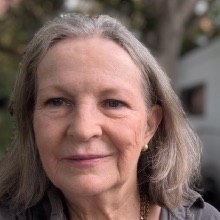 Tina Beattie
In 2020, she left her position as Professor of Catholic Studies at Roehampton University, London, and currently works as an independent researcher and writer. She extensively researched and published the works of Fr sacramentality, desire, incarnation and gender, connecting psychoanalytic theory, art history and theology in her work. She completed her doctoral studies on the topic of the Virgin Mary in patristic theology and gender theory. In addition to numerous scientific articles and p She is the author of several books, including: A Theology of Becoming: Body, Blood, Birth, and Sacrament (CUP, forthcoming); Theology After Postmodernity: Divining the Void (OUP, 2013); The New Atheists: The Twilight of Reason and the War on Religion (DLT, 2008); New Catholic Feminism: Theology and Theory (Routledge, 2006); God’s Mother, Eve’s Advocate: A Marian Narrative of Women’s Salvation (Continuum, 2002). In addition to her academic work, Tina is a published writer and a regular contributor to the media, including BBC Radio 4’s Thought for the Day. She works with academic and educational groups and projects to promote the role of women in the church and society. She is the President of the Sophia Institute, based in Namibia, which offers online and in-person courses in leadership, pastoral formation and theology for religious women in sub-Saharan Africa. She is responsible for the development of the theological curriculum and teaches a one-year online course “Introduction to Theology”, in the context of African cultures and theologies. -
 Jasmina Husanović
Prof. Dr. Jasmina Husanović teaches
in the Department of Cultural Studies and Gender Studies at the University of Tuzla. Her research interests are in the field of cultural and political theory and practice with an emphasis on the politics of testimony, equality and solidarity, the culture of trauma, and emancipatory politics with a focus on the intersections of cultural production and knowledge production, critical pedagogies and social activism. She is active in numerous educational, publishing and civic initiatives and platforms in the regional and international context that deal with issues of memory, trauma, violence, equality, solidarity and social justice. One of her recent publications is the author’s scientific monograph “Culture, Community and Activism in Bosnia and Herzegovina” (2020), and the collection of scientific papers “Challenges of integrating gender equality in the university community: Against gender-based violence” (2022), of which she is the co-editor. -
 Milena Karapetrović
Milena Karapetrović is a professor at the Faculty of Philosophy, University of Banja Luka, where she defended her doctorate in philosophy in 2009. She lectures on the following courses: Ontology; Pragmatic Philosophy; Feminist Philosophy; Democracy and Human Rights; Philosophy of Gender and Media; Gender, Identity and Development. In addition to numerous scientific and professional works, she has also published the books: Female Philosophers (2020), Philosophy in the Digital Age (2020), In the Labyrinths of Being (2014), Longing for Europe. Philosophical Foundations of the Idea of Europe and European Identity (2010) and She Has a Name. On Philosophy and Feminism (2007). She is a member of the International Association of Women in Philosophy and has participated in education and scientific conferences in BiH and abroad. Since 2020, he has been managing the Institute for Humanities and Social Sciences of the Faculty of Philosophy, University of Banja Luka. -
 Leonida Kovač
Leonida Kovač is an art historian and theoretician, curator and permanent professor at the Academy of Fine Arts, University of Zagreb. Her main areas of interest are contemporary art, critical theory and feminist theories. The curator conceived and realized numerous exhibitions, among them exhibitions in the Croatian Pavilion at the Biennale in São Paulo (2002) and at the Biennale in Venice (2003). From 2002 to 2005, she was elected vice-president of the International Association of Art Critics – AICA, based in Paris. She organized and co-organized several scientific conferences in Croatia and abroad, and held a series of invited lectures at European universities. She has published the following books: Contexts (1997), Identity Codes (2001), Edita Schubert (2001), Relational Realities (2007), Gorki Žuvela: Invent Yourself (2009), Anonimalia: Normative Discourses and Self-Representation of 20th Century Women Artists (2010), Tübingen Box: Essays on Visual Culture and Biopolitics (2013), In the Mirror of the Cultural Screen: Jagoda Kaloper (2013), Mrđan Bajić: Dissemination Transversals (2017), Disseminations (2023) -
 Lidija B. Radulović
Lidija B. Radulović is a full professor at the Faculty of Philosophy, University of Belgrade, where she teaches and researches phenomena in the fields of ethnology and anthropology. Her scientific work lies at the intersection of anthropology of religion, gender studies, and anthropology of social inequalities, with a special focus on contemporary transformations of religion in Serbia. Research interests of Prof. Radulović’s research interests range from Serbian folk religion, Orthodox Christianity and its living expressions, alternative religious movements and occult practices, religion in digital environments, and religious life in institutional settings such as prisons. In recent years, she has expanded her work to the anthropology of inequality, examining the intersections of religion, gender, disability, and structural violence in everyday life. Professor Radulović has participated in numerous research projects, as well as several international and bilateral collaborations. These include academic collaboration with the University of Primorska, comparative projects on Europeanization in Serbia and Slovenia, research on the history of homosexuality and homophobia in Serbia, and interdisciplinary studies on gender-based violence, women’s reproductive and labor rights, and societal responses to epidemic crises. She has also taught within the interdisciplinary doctoral program in Gender Studies at the University of Novi Sad. She is the author of numerous articles and several monographs dealing with religion, gender, and contemporary spiritual practices, including studies on occultism (“Occultism Here and Now: Magic, Religion, and Fashionable Cults in Belgrade”. Belgrade: SGC; Faculty of Philosophy, 2007), the construction of gender in Serbian folk religion (“Sex/Gender and Religion: The Construction of Gender in the Folk Religion of the Serbs”. Belgrade: SGC; Faculty of Philosophy, 2009), religious revitalization in post-socialist Serbia (“Religion Here and Now: The Revitalization of Religion in Serbia”. Belgrade:, Faculty of Philosophy, University of Belgrade; SGC, 2012.”), and religious life in Serbian prisons (“(They) Don’t Think of God: An Anthropological Study of Religious Life in Prisons in Serbia”, Belgrade: Faculty of Philosophy; Dosije Studio, 2023.) Her publications contribute to the understanding of living religion, everyday religiosity, and the ways in which social transformations shape religious practices and identities. -
 Selvira Draganović
Selvira Draganović is an Associate Professor at the Faculty of Arts and Social Sciences, Psychology Study Program, and a member of the academic staff of the International University of Sarajevo (IUS) since 2011. She teaches courses in the fields of mental health, positive psychology, psychopathology, and trauma psychology. She is an accredited and experienced psychotherapist who applies EMDR therapy (Eye Movement Desensitization and Reprocessing). Her research interests include risk and protective factors in mental health and psychopathology, with a special focus on attachment, divorce, marriage and family, abuse, violence, and trauma. She currently serves as the Head of the Psychological Counseling Service for Students at IUS. In addition to her strong commitment to women’s empowerment and contributions to gender equality initiatives, she actively collaborates with local student, teacher and professional associations through various projects in the field of mental health. -
 Adis Đuderija
Adis Duderija is a member of the first generation of Bosnian-Australian immigrants. He received his PhD in 2010 from the Centre for Muslim States and Societies at the University of Western Australia, with a focus on methodologies for interpreting the Quran and Sunnah within neo-traditional Salafism and progressive Islam. He is currently employed as an academic at Griffith University in Brisbane, Australia, where he teaches courses on Islam and gender, Islamic intellectual tradition, and Islam and Muslims in the West. He is the author of nine books that deal with various aspects of the Islamic intellectual tradition (progressive Islam, Quranic hermeneutics, the concept of the Sunnah, the maqasids of the Sharia, Salafism), as well as issues of Islam and Muslims in the West. He has published over 100 academic papers on these topics. -
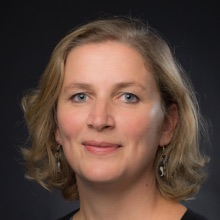 Larisa Kasumagić Kafedžić
For the past 25 years, she has been actively involved in peacebuilding, community youth development programs, the philosophy of nonviolence, teacher professional development, and intercultural pedagogy in language education. She holds a Master’s degree in International Development and Education (MDE) from Cornell University and a PhD in English Language Teaching and Intercultural Education from the University of Sarajevo. She is an Associate Professor at the Faculty of Philosophy, University of Sarajevo. Her research interests include intercultural education, peace pedagogy, language education, teacher training, and action research in teacher professional development. She is also the founder of President of the Peace Education Hub, founded in early 2020 at the University of Sarajevo. -
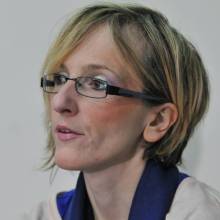 Zlatiborka Popov – Momčinović
Zlatiborka Popov – Momčinović (1975) is an associate professor of political science at the University of East Sarajevo. She received her PhD from the Faculty of Political Science in Belgrade with her thesis Women’s Movement in Post-Dayton Bosnia and Herzegovina: Achievements, Initiatives, and Controversies. Her research focuses on the women’s movement and activism, gender policies, peacebuilding and reconciliation, especially from a gender and religious perspective. She has published more than 80 scientific papers and monographs: Religious Tolerance in Bosnia and Herzegovina (co-authored), Women’s Movement in Bosnia and Herzegovina: The Articulation of a Counterculture, and Women and Reconciliation Processes in Bosnia and Herzegovina: A Challenge to Gender Roles, Established Narratives and Performative Practices with a Focus on Religion. Since 2012, she has been participating in the research project of the Center for Empirical Research on Religion in Novi Sad and the University of Edinburgh, Religion and Ethics in War and Peace. She is a member of the Political Science Committee at the Academy of Sciences and Arts of Bosnia and Herzegovina. She speaks English and German, and is also fluent in French. -
 Assoc. Prof. Dr. Anja Zalta
Anja Zalta is an associate professor of sociology of religion at the Department of Sociology, Faculty of Arts, University of Ljubljana, Slovenia, and the author of many articles on religious traditions and identities, Islam in Slovenia and Europe, interreligious and intercultural dialogue, Asian religious paradigms, and the role of monotheistic religions in European cultural and religious history. In 2013, as an executor of an international project at Istanbul University, she studied the rights of religious minorities, especially in the province of Tur Abdin on the Turkish-Syrian border. At the Nan Tien Institute in Wollongong, Australia, between 2014 and 2015, she analyzed the role of socially engaged Buddhism and led a platform for interreligious dialogue. She is a board member of the Slovenian Sociological Society, and a member of the editorial boards of Druzboslovne razprave and Poligraf. She is also co-editor of the monograph Women Against the War System (Lit Verlag, Zurich 2017). -
 Marie Berry
dr. Marie Berry is a feminist sociologist whose research and work focuses on gender, violence and social movements. She is an Associate Professor at the Josef Korbel School of the University of Denver and Director of the Inclusive Global Leadership Initiative (IGLI), an initiative that aims to empower and advance the work of grassroots women activists working to promote peace, democracy, and human rights around the world. Her award-winning book War, Women, and Power: From Violence to Mobilization in Rwanda and Bosnia-Herzegovina (Cambridge University Press, 2018) explores the impact of mass violence on women’s political mobilization in Rwanda and Bosnia and Herzegovina. Together with Dr. Milli Lake (LSE), she leads the Women’s Rights After War project. She is the recipient of the prestigious CAREER Award from the National Science Foundation for 2021 and the Presidential Early Career Award for Scientists and Engineers (PECASE) for 2025. -
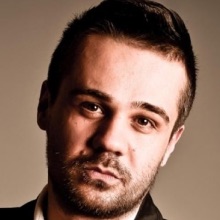 Hazim Begagić
Dr. Begagić is a producer, university professor and researcher in the field of performing arts and cultural policies. He graduated from the Academy of Dramatic Arts (theater, film, radio and TV), and completed postgraduate studies at the universities of Sarajevo (BiH), Bologna and Siena (Italy). He received his PhD from the University of Zagreb in Performing Arts and Film Studies. He was the director of the Bosnian National Theater Zenica and the International Festival of Bosnian drama (2010–2020), and the director and main producer of more than 100 artistic projects and international co-productions.
He participated in the jury work and was a selector of numerous theater and film festivals in the region. He completed a one-year professional development program at Florida State University and a three-year program at the DeVos Institute for Arts Management and Production in Washington, USA. He is the author and co-author of a significant number of professional papers, publications and strategic documents in the field of artistic production, cultural policies, management and creative industries. He is currently employed at the Faculty of Philosophy, University of Zenica, where he leads the Cultural Studies study program and is the head of the Department of of culture and tourism. -
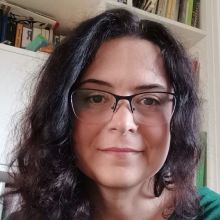 Ajla Demiragić
Ajla Demiragić (born 1976 in Mostar) graduated, received her master’s and doctoral degrees from the Faculty of Philosophy, University of Sarajevo. She is employed as an associate professor at the Faculty of Philosophy, University of Sarajevo. At the Department of Comparative Literature and Information Sciences, she teaches courses in the field of literary theory, as well as feminist and gender studies. In addition to her engagement at her home faculty, she also worked as an associate at the Interdisciplinary Postgraduate Gender Studies, University of Sarajevo. She has published the book War Counternarratives of Bosnian-Herzegovinian Writers (Zagreb: Institute for Ethnology and Folkloristics, 2018), and over twenty scientific and professional papers. Her scientific interests are primarily focused on feminist theories, gynocriticism, narrative theories, and literary theoretical and cultural research into literature. -
 Anita Dremel
Anita Dremel graduated in sociology and English language and literature (2006) and Japanology (2007), and received her doctorate in social sciences, sociology (2014), from the Faculty of Philosophy in Zagreb. She is currently an associate professor and head of the Department of Sociology, Faculty of Philosophy, Osijek, where she teaches eight courses. She is the president
of the University Commission for Gender Equality. He works on scientific projects and publishes scientific papers in Croatia and abroad (list of papers: CRORIS https://www.croris.hr/osobe/profil/32831 and Google Scholar https://scholar.google.hr/citations?user=XV1uYigAAAAJ&hl=hr ). She is a member of the program board
international scientific conferences. Actively participates in the work of the Center for Women’s Studies in Zagreb. She is the chief responsible editor of the Review of Sociology. Her research interests lie in the fields of sociological theory and the specific sociologies of culture, gender and art. -
 Jasminka Hasić Telalović
Jasminka Hasić Telalović is an Associate Professor of Computer Science at the Sarajevo School of Science and Technology (SSST), with extensive international academic and research experience gained at the University of Warwick (PhD), Brown University (MSc) and the University of New Hampshire (BSc). Her scientific work includes the fields of artificial intelligence, data science, machine learning, medical informatics and high-performance computing, with a special focus on the application of AI methods in medical decision-making and microbiome research. She is the author of numerous scientific papers published in international journals and proceedings, and the leader and coordinator of several European projects, including the HORIZON Europe projects EDIRE and BUDGET_IT. Her contribution to the promotion of gender equality in science and higher education, as well as the development of study programs and research capacities in Bosnia and Herzegovina, is particularly noteworthy. -
 Merima Jašarević
She is an associate professor in the field of sociology at the Faculty of Education, Department of Sociology, University “Džemal Bijedić” in Mostar. She received her doctorate on the topic of sociological understanding of new tendencies in art in Bosnia and Herzegovina in the second half of the 20th century at the University of Sarajevo. She is an independent lecturer in several subjects: Sociology of Culture and Art, Sociology of Settlements, Sociology of Marriage and Sexuality, Cultural Theories and Sociological Theories. From 2014-2020, she was the head of the Department of Sociology at the Faculty of Education in Mostar and was also the coordinator of several scientific research projects. She is the co-author of the book Culture and Youth (2018). She is the editor-in-chief of Educe – a journal for education, science and culture, and has published dozens of scientific papers with a focus on mass media, culture and education. Researches and monitors feminist concepts and activities in public discourse in BiH. -
 Ksenija Magda
Ksenija Magda is an associate professor of biblical theology at the University Center for Protestant Theology “Matija Vlačić Ilirik” of the University of Zagreb. She completed her studies in theology at the University of Theology in Osijek, and received her doctorate in London at Brunel University (London School of Theology). In his academic research, he deals with the exegesis of the New Testament, among other things, with an emphasis on kontextual and women’s reading of the Bible. In 1994, she started dealing with the issue of women in the church and society, first within the church. Since then, she has collaborated in several domestic and international projects working groups and commissions dealing with women’s issues in society and the church. From 2015-2020 served as president of the women’s organization of the Baptist World Federation, based in Washington. She is currently the president of the Croatian section of the European Society of Women in Theological Research (ESWTR-CS). A list of more important works is available on her CROSBI profile https://www.bib.irb.hr/profile/25143. -
 Jelena Ćeriman
dr. Ćeriman holds a PhD and is a senior research associate at the Institute of Philosophy and Social Theory, University of Belgrade. Her research interests combine theoretical approaches of political and cultural sociology and critical gender studies, using both qualitative and quantitative research methods. She carried out her postdoctoral research in Budapest (Institute for Minority Studies – Center for Social Sciences of the Hungarian Academy of Sciences, 2022) and in Ljubljana (ZRC SAZU, 2023). She is also the recipient of a fellowship for engaged research (2022/23), supported by the Talloires Network of Engaged Universities and the Open Society Universities Network (OSUN). Within this program, she researched the realization of collective rights of national minorities in Serbia. She was the coordinator of the Serbian team within the project “Disobedient Democracy” (DisDem), and currently leads an international working group responsible for specific activities within a work package of the European University Alliance CircleU. Her research has been recognized as relevant for public policy development, and some of it has been included in national strategies in Serbia. She has published numerous papers in peer-reviewed journals and proceedings, and is actively engaged as a mentor and reviewer in the domestic and international academic environment. -
 Selma Veseljević Jerković
Selma Veseljević Jerković is an associate professor at the Department of English Language and Literature, Faculty of Philosophy, University of Tuzla, and is currently the head of the Department of English Language and Literature. She teaches literary theory, English and American literature, and cinematography at undergraduate and graduate levels. Her research interests include dystopian themes in young adult literature and popular culture, and 21st-century American and English literature. More recent research by dr. Veseljević Jerković are focused on comics and graphic novels, as well as adaptation studies. -
 Irena Sever Globan
Irena Sever Globan is an extraordinary professor at the Department of Communication at the Croatian Catholic University in Zagreb, where she teaches courses in interpersonal communication, film art, media theories and international communication. She graduated in theology at the Catholic Faculty of Theology in Zagreb, and graduated and received her doctorate in communication at the Pontifical Salesian University in Rome. She taught at the Department of Cultural Studies of J. J. Strossmayer University in Osijek, at the Faculty of Croatian Studies at the University of Zagreb, at the Department of Communication at the University of Dubrovnik and at the Faculty of Philosophy of the Society of Jesus University in Zagreb. The topics of her scientific interest concern gender representation in the media, the relationship between religion and culture, and film art. She is a member of the Society for Communication and Media Culture (DKMK), the Center for Nonviolent Communication Croatia (CZNK) and is the vice-president of the Croatian section of the European Society of Women in Theological Research (ESWTR-CS). -
 Suzana Vrhovski Peran
Suzana Vrhovski Peran is an assistant professor at the Department of Communication at the Croatian Catholic University. The areas of her scientific research are the family and the media, the credibility of the media, the representation of women in the media, religious themes in the media, the relationship between the Church and the media, and media literacy. She is a lecturer in the media group of subjects at various studies at the University of Zagreb. She is the editor and author of several books and the author of numerous scientific papers. She is a long-time journalist and editor. She is the president of the Croatian Association of Catholic Journalists. -
 Ivan Stojšić
Dr. Ivan Stojšić holds the title of Research Associate in the field of pedagogy at the Faculty of Science and Mathematics, University of Novi Sad. He completed his doctoral studies in natural science teaching methodology at the same faculty in 2020. He is also the coordinator of the Center for Educational Technology, Methodological Development and Career Guidance of Biology Teachers (University of Belgrade – Faculty of Biology). He is the author and co-author of more than twenty scientific papers dealing with the use of immersive technologies and artificial intelligence in teaching and learning, as well as the gender dimension of digital technologies and gender-sensitive approaches in education. He is a member of the editorial boards of four international journals. -
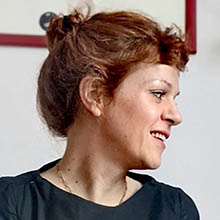 Adriana Zaharijević
She is a Senior Research Associate at the Institute of Philosophy and Social Theory, University of Belgrade. She graduated in philosophy from the Faculty of Philosophy in Belgrade, and completed all other levels of study at the Faculty of Political Sciences, combining political philosophy with feminist theory and social history. She has been a member of the Association of Literary Translators of Serbia since 2003. She publishes in Serbian and English, and her texts have been translated into numerous European languages. She is the author of the books Becoming a Woman (RŽF 2010), Who is an Individual? Genealogical Questioning of the Idea of a Citizen (Karpos 2014, 2019), and Life of the Body. Political Philosophy by Judith Butler (Academic Book 2020), for which she received the “Anđelka Milić” award. -
 Amina Selimović
She is employed as an associate professor and doctoral researcher at the Faculty of Theology, University of Oslo. Her research areas are Islamic feminism and contemporary Islamic thought. She teaches, among other things, Islam and gender, Islamic ethics, Islam in Europe, interreligious dialogue and interreligious theology. In addition to academia, she is active in politics and volunteering, and contributes to public discourse as an author and lecturer. -
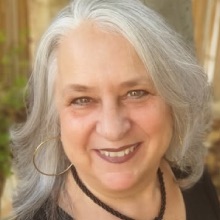 Elana Sztokman
Dr. Elana Sztokman (pronounced ee-LAH-nuh STOK-men, she/her) is an anthropologist, educator, blogger, podcaster, award-winning author of seven genre-defining books, and a feminist activist dedicated to building a more just and compassionate world. As co-host of the podcast Women Ending War, she gives a voice to women who dedicate their lives to peace and justice. Through a physical and spiritual journey, from Orthodox Jewish Brooklyn, to Jerusalem, India, Australia, various religious denominations, to experimenting with political and spiritual ideologies, Elana’s career spans more than three decades and encompasses education, research, and community activism. Through her academic work, storytelling, and creativity, she challenges systems of violence, patriarchy, and inequality, promoting empathy, inclusion, and justice, with a particular focus on empowering women as leaders. Learn more about her on her Author page or on Substack -
 Selina Palms
She holds a PhD in Theology and Development from the University of KwaZulu-Natal, and a MA in Systematic Theology and Human Rights. She has over seventeen years of experience in leadership positions in NGO and faith-based projects across Africa, Asia and Europe. As a liberation theologian and feminist researcher, she focuses on the complex connections between religion and violence. She is currently a Research Fellow at the Religion and Development Research Unit at the Faculty of Theology, Stellenbosch University, where she leads research, education and consultancy projects for various international organisations. She is a recognised expert on issues of religion, development and violence, particularly in the context of working with vulnerable children. She conducts research commissioned by religious institutions, NGOs and governments at local, national and international levels. In addition to her academic work, she is also engaged as a lay leader at Rondebosch United Church in Cape Town, where she develops new pedagogical approaches to promote social justice. -
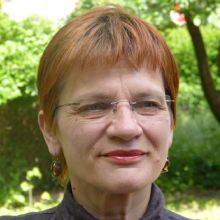 Ana Marija Raffai
Ana Marija Raffai (1959) is a peace activist, Catholic theologian and professor of French and German. She graduated in theology in 1991 with a thesis on feminist theologian Katarina Halkes. As a feminist theologian, she collaborates with organizations that advocate for women’s human rights. In 2016, she received her doctorate on the subject of nonviolence in the liberation theology of Dorothea Soelle. Since 1996, trainer for non-violent action at the RAND association. Council member of the Women’s Ecumenical Initiative. Member of the Croatian branch of the ESWTR society. He coordinates the Believers for Peace initiative, which since 2006 has organized four regional conferences “Building peace, glorifying God”. Since 2019, he has been collaborating on the development of the institution Politics of Nonviolence. With Otto Raffai, he regularly writes in the “Revolution of tenderness” column on the autograf.hr portal with the aim of popularizing non-violent action. Published several manuals and several articles in the area of her interest in Croatian, German and French. Together with her husband, she received the International Reconciliation Movement’s Peace Award in 2003 and the Kruno Sukić Award for the Promotion of Peacemaking, Nonviolence and Human Rights in 2012. Mother of three. -
 Amra Pandžo
Amra Pandžo received her doctorate from the Faculty of Political Sciences, University of Sarajevo, Department of Security and Peace Studies. For more than twenty years, she has been dedicated to building peace, trust and social recovery after the war in Bosnia and Herzegovina, guided by the values of Islam, but also by the universal principles of humanity and justice. She taught Religion, Violence and Conflict Resolution and Religion and Social Justice at the University of Sarajevo, and she also gained teaching experience at the University of Zurich, Switzerland. In a survey by the TPO Foundation, she was recognized as one of eleven women who made an exceptional contribution to peacebuilding in post-war Bosnia and Herzegovina. She has also shared her experiences in working with communities in Kosovo, Ukraine and Afghanistan, where she participated in reconciliation and dialogue processes. She is currently the director of the Association for Dialogue in Family and Society “Small Steps”. She is the author of a manual for Islamic religious education teachers on the peace dimension of Islam, as well as the book The Path of Peace: Peacebuilding and Islam in Bosnia and Herzegovina. -
 Randall Puljek-Shank
Dr. Randall has over 25 years of experience in peacebuilding, including program design, implementation, training, evaluation, and research, with a primary focus on the Western Balkans. From 2002 to 2012, he worked with the non-governmental organization Mennonite Central Committee (MCC), where he supported local organizations engaged in strategic peacebuilding, interfaith action, and trauma healing. His recent work includes evaluations of programs such as Initiatives of Change’s Trustbuilding Programme, MCC’s Colombia and Ecuador programs, Interpeace’s Peace Responsiveness Program, and forumZFD’s Western Balkans program. He also led a team of researchers in the collaborative research Improving Your Programmatic Learning Journey: A Resource Guide for HDP Nexus Practitioners Improving Your Programmatic Learning Journey: A Resource Guide for HDP Nexus Practitioners. As a facilitator and process design consultant, he has worked for Transparency International, IOM, and Helvetas. In addition, he designed and facilitated five exchanges for selected government and non-governmental representatives from Ukraine to learn from the experiences of BiH practitioners. Randall holds a PhD in Political Science from Radboud University in Nijmegen. His doctoral research deepened his interest in the relationship between civil society and politics in ethnically divided societies, and his work has been published in the journals Cooperation and Conflict, Democratization, and Voluntas. He has taught undergraduate courses in political science and social movements, and postgraduate courses in capacity building, program planning, monitoring and evaluation, and peacebuilding theory. -
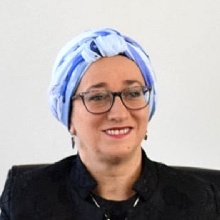 Sabiha Husić
Sabiha Husić, PhD is a psychotherapist and interfaith peacebuilder and the director of the NGO “Medica” Zenica in Bosnia and Herzegovina (BiH). Husić earned her PhD in 2019 in the field of gender studies at the Center for Interdisciplinary Studies, University of Sarajevo. Her doctoral thesis was on “Criticism and Transformation of Social Support Models for Survivors of War-Time Sexual Violence in Bosnia and Herzegovina: Feminist and Cultural Perspectives”. She received her professional training through the Specialist Studies in International Education, Brattleboro-Vermont in the USA, which she completed in 2003. She has received several awards for her work, including: “Peacemaker Award” Joan B. Kroc Institute for Peace & Justice – University of San Diego, USA (2013); Award ada “Woman of the World” for exceptional leadership and unwavering commitment to helping women and children survivors of war and post-war violence in BiH. -
 Medina Mujić Assoc. Prof. Dr. Medina Mujić is a doctor of humanities in the field of communication studies. She has published a number of scientific and professional papers in Bosnia and Herzegovina and Europe, with a focus on gender equality, the position of women in the public and private spheres, and power relations in academic institutions and public life. Her academic interests include gender studies, media reporting, gender representations in public discourse, and mechanisms of reproduction of patriarchal roles through media and tradition. For more than fifteen years, she has been actively collaborating with civil society organizations, dedicating herself to the protection of women’s human rights and education in the field of gender-based violence and partner relations. She is the author, co-author, editor and reviewer of numerous publications and proceedings in the field of human rights.
 -
 Zorana Antonijević
She received her doctorate in gender studies from the University of Novi Sad in the field of gendering family support policies in the context of European integration in Serbia. From 2009 to 2021, she worked as a gender equality advisor in the OSCE Mission since 2009. Before that, she worked as a gender equality advisor for various international and civil society organizations as well as in public administration. She was the first gender equality advisor in the provincial government and the founder and first director of the Institute for Gender Equality, Government of Vojvodina. She has edited several publications in the field of gender equality in the security sector, gender-responsive budgeting and gender mainstreaming. Since 2017, she has been a visiting lecturer at the Faculty of Political Sciences in Belgrade on the subject Gender and Security within the Master’s program in International Security. Her research areas include the institutionalization of feminist theories and practices, public policies in the field of care and security, as well as the theoretical and practical consequences of gender mainstreaming public policies in Serbia and the region. -
 Melida Travančić
Melida Travančić has a doctorate in humanities in the field of literature. She writes poetry, prose, essays, literary criticism and scientific papers. She has published five books of poetry: Ritual (2008), Silk Sheets (2009), Shadow in the Shadow, (2019), Veo nad rijekom C (2022) and Moja majka hrani mrtvog psa (2023). She has won five poetry awards: “Mak Dizdar” (2007), “Anka Topić” (2008), the Foundation for Publishing Awards (2019 and 2023) and the international literary award “Ismet Rebronja” (2022). She is the winner of the Zija Dizdarević First Prize for the best short story in BiH for 2025. She is the winner of the “Muris Idrizović” First Prize for the best unpublished essay on children’s literature awarded by the Institute for Children’s Literature of BiH (2025). She has published two books of prose Death in the Mirror (2019) and Entrance into the Void (2021), for which she received the Bosanska riječ Annual Book of the Year Award 2021. This book has been translated and published in German and has been published in Sweden. Her poems and stories have been published in collections and anthologies in Bosnia and Herzegovina and the region, and her poetry has been translated into Macedonian, English, Spanish, Persian, Hungarian, German, French and Slovenian. She has published four studies on literature: Ticket to the Heroic Cabaret: Literary Reflections on the Sarajevo Assassination (2019), Reconstruction of Reality: Essays on Contemporary Bosnian and Herzegovinian Literature (2021), Woman in the Text: Literary Observations (2023) and In the Other Person: Reading Contemporary Montenegrin Literature (2025). She has participated in several literary festivals in the country and abroad, literary residencies, as well as international scientific meetings and conferences. She publishes literary criticism in the daily newspaper Osobođenje and on the portal Booksa.hr. She is a member of the Writers’ Association of Bosnia and Herzegovina and the PEN Center of Bosnia and Herzegovina. -
 Nirha Efendić
Dr. Nirha Efendić is the curator of oral poetry at the Ethnology Department of the National Museum of Bosnia and Herzegovina and a senior associate scholar in the field of folklore and ethnology and a lecturer at the Music Academy of the University of Sarajevo. She was born in 1979, and completed her secondary education in Zagreb in 1998. She graduated from the Department of Oriental Philology at the Faculty of Philosophy, University of Sarajevo (2002), where she also received her master’s degree (2009) and then her doctorate (2014) in the field of literary and historical sciences. She is the winner of the award for the most talented graduating students. in 2002 in the Federation of Bosnia and Herzegovina. She has published dozens of professional and scientific articles in domestic and foreign journals, two co-authored and two independent books – research studies. She is a member of several international associations in the fields of ethnology, anthropology and folklore (SIEF – International Society for Ethnology and Folklore), anthropology and sociology (ASEEES – Association for Slavic, Easteuropean, and Euroasian studies), as well as folklore and ethnomusicology (ICTM – International Council for Traditional Music). N. Efendić also gained her research experience during several study stays in Great Britain (2004 in Exeter; 2006-2007, in Oxford and 2008 in Stoke-on-Trent). She also received the research excellence rating in the framework of the European Union project through the Horizon 2020 program, as a researcher on the Closing the Gap Between Formal project and Informal Institutions in the Balkans (INFORM, № 693537) 2015-2018. -
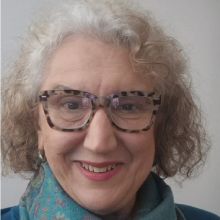 Željka Jelavić
Željka Jelavić graduated in ethnology and sociology at the Faculty of Philosophy, University of Zagreb. She has a master’s degree in gender studies at from the Central European University in Budapest, and received her doctorate from the Department of Ethnology and Cultural Anthropology of the Faculty of Philosophy of the University of Zagreb with the topic of contemporary childbirth practices. She spent her working life in the Ethnographic Museum in Zagreb as the head of museum education. She is the author of educational programs, exhibitions, professional and scientific articles, and editor of anthologies and magazines. As an external collaborator she taught at the Department of Sociology of the University of Zadar and the Department of Sociology at the Faculty of Philosophy University of Zagreb. She is the co-founder of the Center for Women’s Studies, where she runs the educational program. Areas her interest and activities are directed towards the feminist perspective on the body, reproductive rights and
sexuality. -
 Ivana Radačić
dr. sc. Ivana Radačić is a scientific advisor at the Ivo Pilar Institute of Social Sciences in Zagreb. She is a doctor of legal sciences, and her areas of interest are women’s rights, feminist practices of collective care and holistic human approaches rights involving spirituality (eg contemplative and spiritual activism). He explores these questions not only through scientific and teaching work, but also through various practices, including yoga, somatic work, conscious dance. She has taught at various institutions in Europe, Australia, New Zealand, Central America, and the USA. On to the University of Arizona in the academic year 2023/2024. she developed a course that connected spirituality and human rights and included contemplative practices. She led several research projects in the area of human rights and feminism and published over 40 scientific articles, one author’s book, two in co-authorship and several editorial. From 2017 to 2023, she was a member of the UN Working Group on Discrimination woman and girl. She also worked at the European Court of Human Rights and collaborated with various non-governmental associations. She is a teacher of kundalini yoga, and she also completed a four-year school of body-oriented psycho-therapy, and many courses in conscious dance and somatic and shamanic practices. She is also interested in the cosmovision of indigenous peoples, a during her stay in Arizona she had the opportunity to participate in various ceremonies of the Pascua Yaqui Indians. -
 Melika Šahinović
She has a master’s degree in international and public relations, researcher, author and co-author of several publications on education, gender equality and promotion of peace in the pedagogical approach. Her work experience is related to the civil sector in which she is active over fifteen years. Areas of activity and interest are human rights, international law, gender equality and political empowerment of young people. She places particular importance on the integration of formal and non-formal education and is a certified TOT trainer by the SAPERA Institute UK for the P4C program – Philosophy for Children for the Western Balkans. She currently works as a project manager and leads EU IPA projects in BiH and the region. -
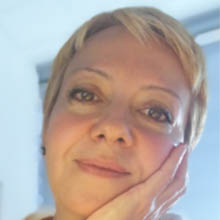 Julijana Mladenovska-Tešija
She is a philosopher and theologian, Macedonian-Croatian, living and working in Osijek since 2005, in the final stages of writing her doctorate in the field of philosophy, religion and peace at Utrecht University, the Netherlands. For her doctoral research, she is the recipient of a prestigious scholarship from the American IPRAF Foundation for 2019-2020. Graduated in philosophy at University of Skopje, master’s degree in theology at Visoko the Evangelical Theological College in Osijek, specialized in human rights and conflict resolution at the University of Oslo and Nansen Academy Lillehammer, Courtship and Public Relations at the London School of Public Relations. From 2007 until today, lecture at the Higher Evangelical Theological College for Philosophical Areas and head of EU projects in which closel ooperates with civil society and religious communities. She is a member of several organizations, and since 2021 the Board for human and minority rights of the City of Osijek. She is the author of several professional works. Areas of interest: religion, human and minority rights, gender equality, nonviolence, activism. -
 Elma Softić-Kaunitz
Elma Softić-Kaunitz graduated from the Faculty of Philosophy in Sarajevo and received her master’s degree in Religious Studies. Since 2005, she has served as the Secretary General of the Jewish Community of Bosnia and Herzegovina, the Jewish Community of Sarajevo, and the Jewish Cultural, Educational, and Humanitarian Society “La Benevolencija”. With more than 30 years of professional experience, she is a professor of philosophy and literature by profession, and she holds a master’s degree in religious studies from the University of Sarajevo. Her research focuses on interreligious dialogue, gender, culture and education, with a particular interest in the contribution of Jewish women in the Balkans. She is the author of the book Sarajevo Days, Sarajevo Nights, published in several languages and adapted for theatre and radio performances in Toronto, Atlanta and Chicago. Together with Pavla Kaunitz, she is the co-author of two collections of stories: Nira’s Challenges and Everything We (Don’t) Want to Know. In addition to her books, she has published numerous articles in the Jewish Voice, the journal of the Jewish Community of Bosnia and Herzegovina, as well as in other publications. She was also one of the editors of the first ten shows of Radio La Benevolencija, broadcast in 1994, which marked the beginning of the cultural and educational work of this show. She has contributed to feminist and religious studies as a lecturer at the FER School (Feminism and Religion) of the University of Sarajevo, and has published numerous works on women’s history, education, and interreligious dialogue. -
 Aneta Jovkovska
Aneta Jovkovska is a scholar who works on contemporary issues involving education, religion, spirituality, interreligious dialogue, human rights, and peacebuilding with more than ten years of experience in academic teaching and work in non-governmental sectors. She is a member of the Alumni Association and works as an assistant professor at the Orthodox Theological Faculty in Skopje, Republic of North Macedonia, where she teaches courses: Christian Pedagogy, Methodology of Religious Education, and History of Religion. She has published numerous articles in English and Macedonian. -
 Lana Bobić
A theologian, feminist and activist born in Zagreb in 1985. She completed classical grammar school, undergraduate and graduate studies in theology at the University Center for Protestant Theology “Matthias Flacius Illyricus” at the University of Zagreb, and Peace Studies at the Center for Peace Studies. She researches the issues of structural violence, gender-based violence, relations of dominance and subordination, the role and position of women in the Church. Her area of academic interest is feminist theology, or feminist critical theory in religion. In 2012, she started working as an external collaborator on the FacetoFace campaign of the Autonomous Women’s House Zagreb (AŽKZ), and from 2015 to July 2017. continuously works for AŽKZ. Since the end of 2016, she has been leading the In Good Faith initiative, and since 2018 she has been the executive director association IN GOOD FAITH. She is a member of the Committee for Gender Equality of the City of Zagreb. She is a columnist portal Lupiga and commentator on the Fifth Day on Croatian Radio and Television. As an activist for years advocates human rights and gender equality, cooperates with a number of feminist organizations and initiatives, participates in the organization of protests, campaigns, actions, performances related to gender issues violence and gender equality. He often participates in international and domestic events related to human subjects rights, fight against gender-based violence, gender equality, peace work, dialogue betwee secular and religious. He occasionally holds workshops and lectures on the topic of gender-based violence and gender equality.