
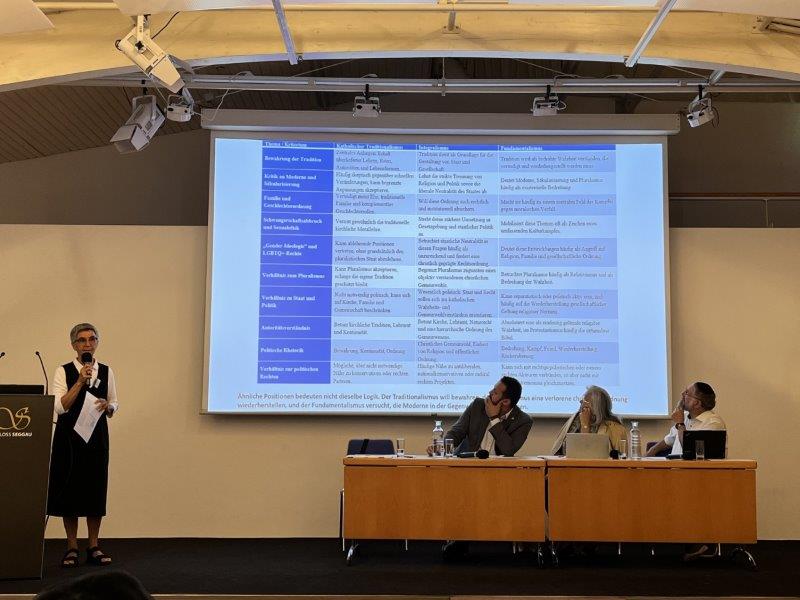
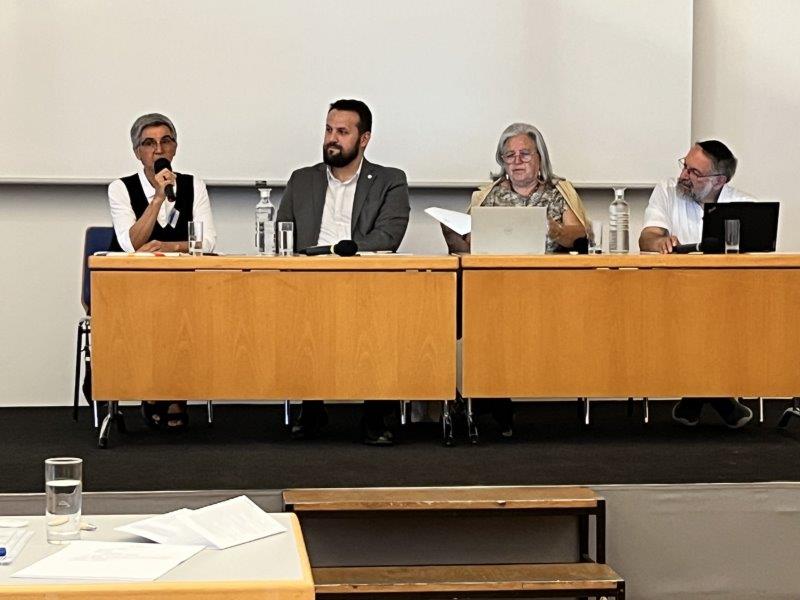
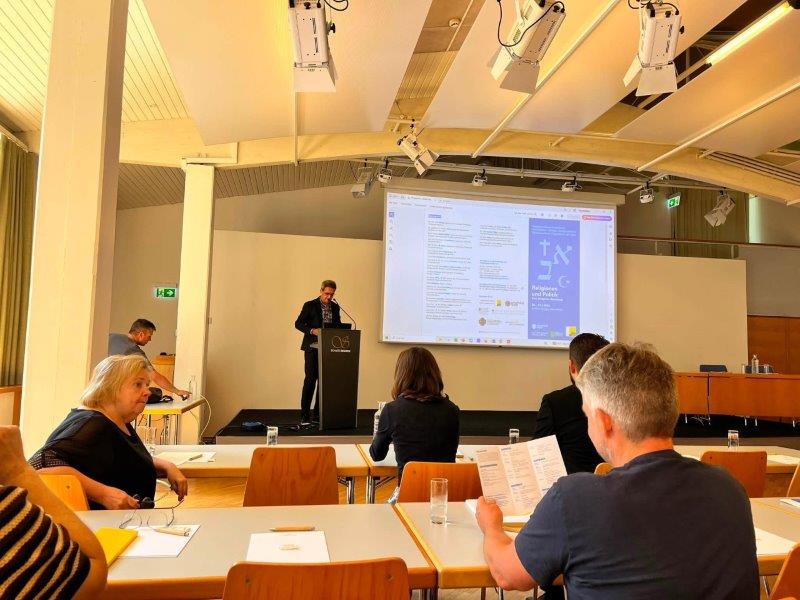
Gender is one of the principal terrains upon which religious authority, ethnonational belonging and political power are negotiated, but gender controversies are rarely only about gender. Prof. Dr. Zilka Spahić Šiljak and Dr. Jadranka Rebeka Anić participated in the Summer School “Religion and Politics,” held in Leibnitz, Austria, from July 20 to 23, 2026. The program brought together scholars, researchers and participants interested in the complex intersections of religion, politics, identity and social change in contemporary European societies.
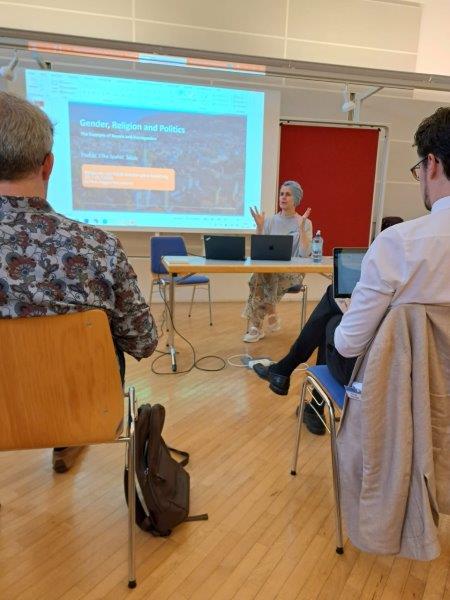
In her lecture, Prof. Dr. Zilka Spahić Šiljak focused on the entanglement of gender, religion and politics in Bosnia and Herzegovina, arguing that gender is one of the principal terrains upon which religious authority, ethnonational belonging and political power are negotiated. As she emphasized, gender controversies are rarely only about gender. They often become symbolic struggles over the family, morality, national identity, collective memory, religious belonging and the future of society. Prof. Spahić Šiljak explained that gender, religion and politics in Bosnia and Herzegovina cannot be adequately understood as three separate domains that occasionally influence one another. Rather, they are historically and institutionally intertwined. Political power is frequently legitimized through religious and ethnonational narratives, while religious authority is often strengthened through its proximity to national identity and political institutions. Gender norms, in this context, provide a powerful language through which ideas about family, collective survival, morality, citizenship and national belonging are expressed and defended. She highlighted that Bosnia and Herzegovina demonstrates the destructive consequences of entangling religion, nationalism and patriarchal power. These entanglements often reinforce exclusionary politics, limit women’s rights and freedoms, and reduce complex social questions to identity-based conflicts. At the same time, Prof. Spahić Šiljak stressed that other forms of entanglement are possible and necessary: between faith and justice, feminism and peacebuilding, memory and responsibility, religious belonging and democratic freedom, as well as between difference and solidarity.
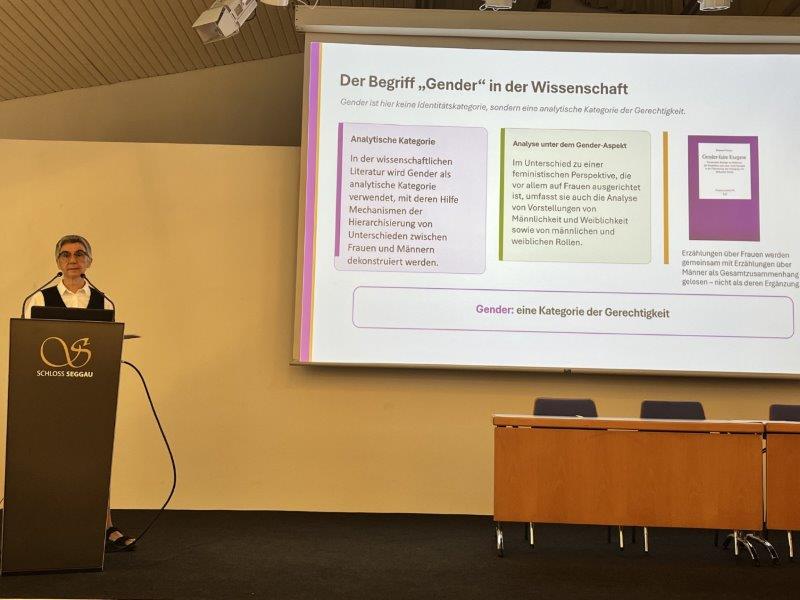
Dr. Jadranka Rebeka Anić spoke about the development and impact of anti-gender movements in Croatia. She analyzed how anti-gender narratives have gained visibility through political mobilization, religious rhetoric, media campaigns and civil society initiatives that present gender equality, feminism and LGBTQ+ rights as threats to the family, children, national identity and religious tradition. In her presentation, Dr. Anić emphasized that anti-gender discourse often functions by producing moral panic and framing gender as an imported ideology, rather than recognizing gender equality as a democratic and human rights issue. She also pointed to the ways in which anti-gender actors in Croatia have mobilized around education, reproductive rights, sexual education, the Istanbul Convention and public debates on family and marriage. These campaigns, she noted, are not isolated events, but part of broader transnational anti-gender politics present across Europe. At the same time, Dr. Anić underlined the importance of feminist theology, critical scholarship, interreligious dialogue and civic education in responding to such narratives with knowledge, ethical responsibility and solidarity.
The participation of Prof. Spahić Šiljak and Dr. Anić contributed to a deeper understanding of how gender debates in Southeast Europe reveal broader struggles over democracy, religion, identity and social justice. Their lectures showed that the intersections of gender, religion and politics are not marginal issues, but central to understanding contemporary challenges faced by societies in the Balkans and beyond.
