
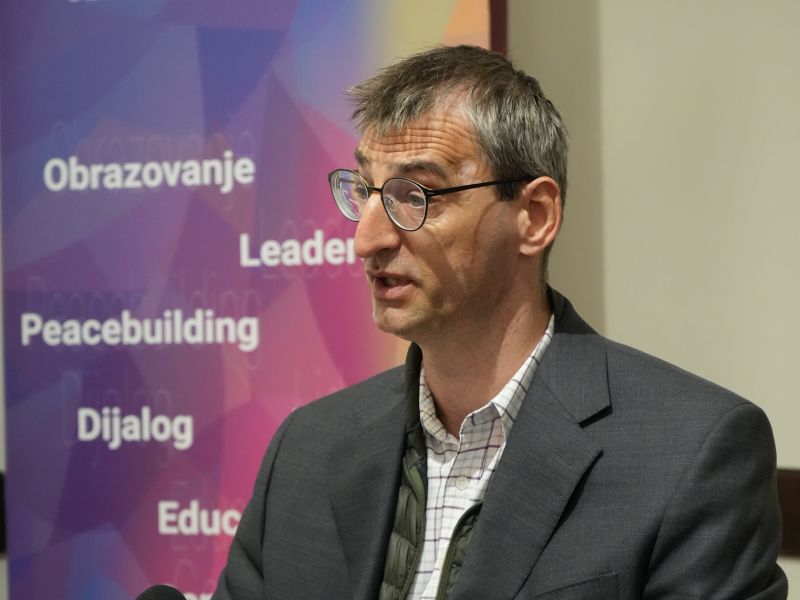
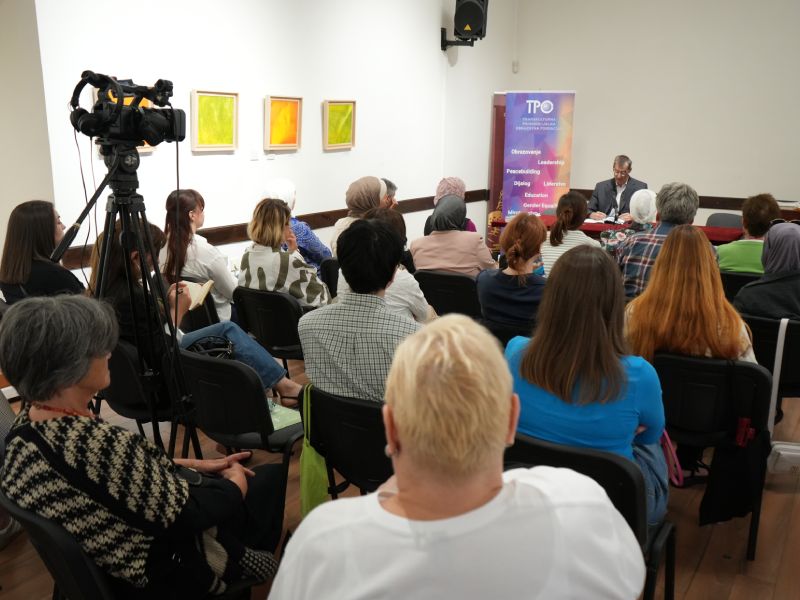
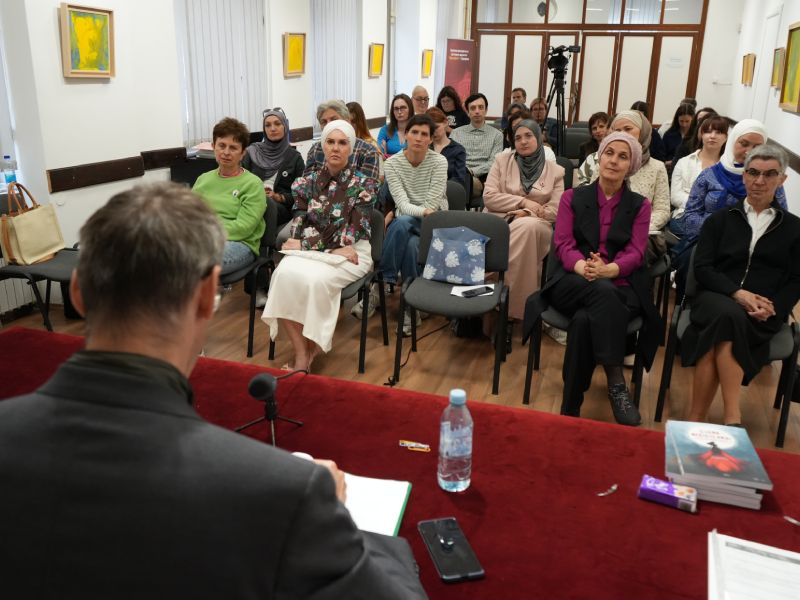
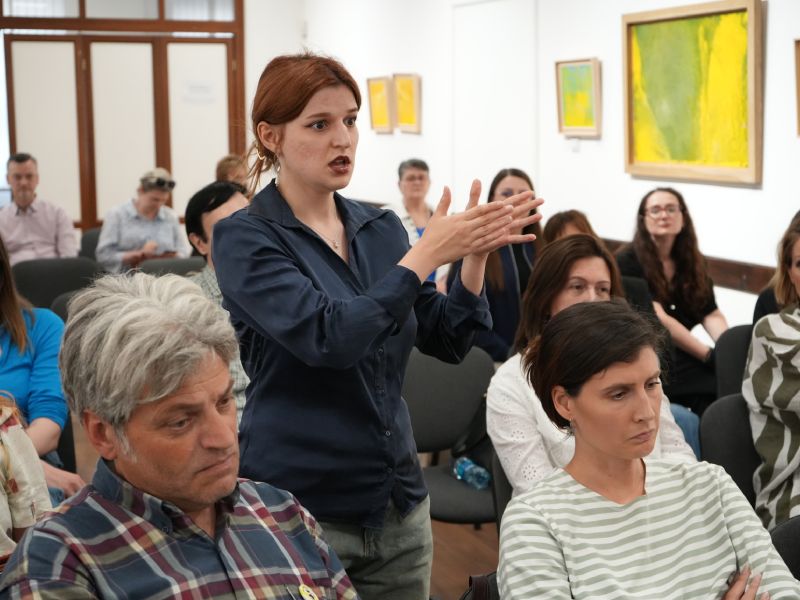
Feminist interreligious Islamic theology requires texts to be read contextually and resists reducing tradition to literal interpretations, Professor Adis Duderija emphasized in his lecture. The lecture was held on June 12, 2026, at the premises of SPKD Prosvjeta, organized by IMIC Zajedno, TPO Foundation, and the University Gender Resource Centre of the University of Sarajevo, and moderated by Nikola Vučić.
Professor Duderija stressed that interreligious dialogue cannot remain merely at the level of courteous encounters and general messages of peace, but must include a serious engagement with the ways in which religious texts, doctrines, and traditions are interpreted in concrete social contexts. He particularly emphasized the importance of feminist and ethical hermeneutics that question patriarchal, exclusivist, and violent interpretations, while opening space for readings that affirm dignity, justice, equality, and responsibility toward the other. Professor Duderija presented several concrete recommendations that could help make dialogue deeper, more relevant, and socially transformative.
The first recommendation concerns the establishment of an interreligious theological seminar in comparative theology, within which sacred texts of different religious traditions would be read comparatively, with special emphasis on addressing historical and contemporary injustices. Such a seminar could become a space for developing ethically responsible interpretations, learning from other traditions, and critically engaging with one’s own theological heritage.
The second recommendation concerns the development of tools for Friday and Sunday sermons, which would include inclusive readings and shared Abrahamic ethical motifs. Such resources could help religious leaders speak in their communities about peace, justice, solidarity, gender equality, human dignity, and social responsibility in a way that connects people rather than deepening divisions.
The third recommendation concerns the deradicalization of doctrinal boundary markers. Professor Duderija pointed to the need to critically re-examine theological rhetoric that reinforces polarization, exclusivity, and mistrust toward others. Instead of rigidly emphasizing the boundaries between “us” and “them,” interreligious theology should develop a language that enables encounter, self-criticism, and responsible recognition of the values present in other traditions.
A particularly interesting proposal was the establishment of the Sarajevo Forum “Hospitality Toward Truth.” The Forum would involve regular public dialogues in which each religious tradition would present one teaching, practice, or value that it has sincerely learned to appreciate in another tradition. In addition, participants would speak about a concrete change that emerged from that encounter and learning. In this way, dialogue would not be merely an exchange of opinions, but a process of mutual learning and transformation.
The fifth recommendation focused on joint ethical actions by religious communities, academic institutions, and civil society organizations. Gender justice, ecological care, care for the elderly, prevention of youth violence, and the fight against corruption were highlighted as particularly important areas of joint action. These topics show that interreligious dialogue must not remain confined to theological discussions, but should be connected to the concrete needs of people and communities. Professor Duderija’s lecture reminded participants that religious traditions can be a powerful resource for peace, justice, and solidarity when they are interpreted responsibly, contextually, and self-critically. Feminist interreligious Islamic theology, as emphasized during the event, does not reject tradition, but reads it more deeply, carefully, and ethically, recognizing within it possibilities for a liberating and more just understanding of faith.
