
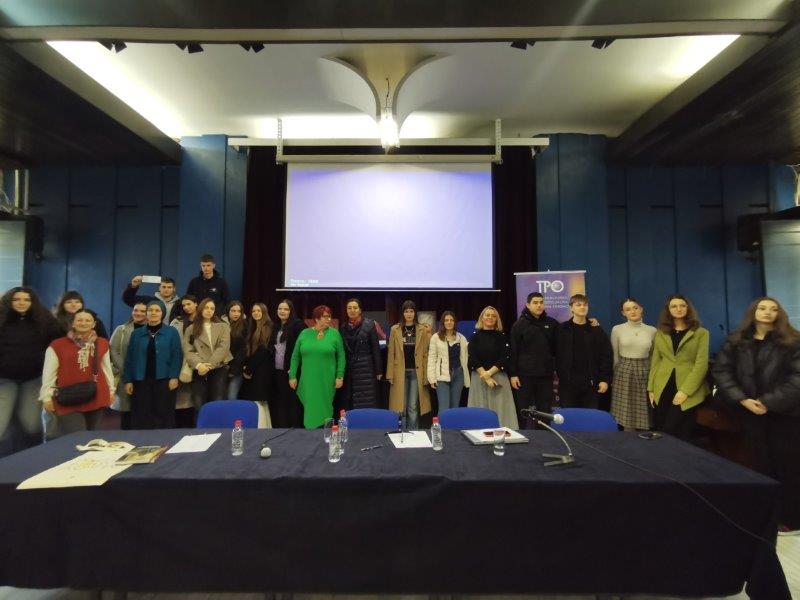
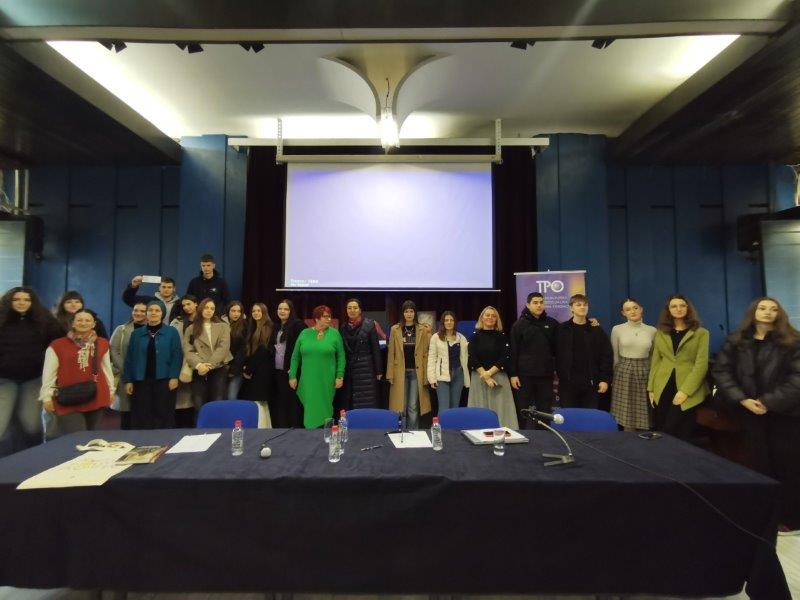
The 16 Days of Activism Campaign concluded with the commemoration of Human Rights Day on 10 December 2025, which TPO Foundation has been organizing for eleven years together with secondary schools at the Jewish Community of Sarajevo. Through three activities—a panel on religion, gender, and violence against women, short student films, and an art exhibition—we reflected on what it means to be human, how to safeguard the dignity of every person, and how to resist every form of violence, especially violence against women and children.
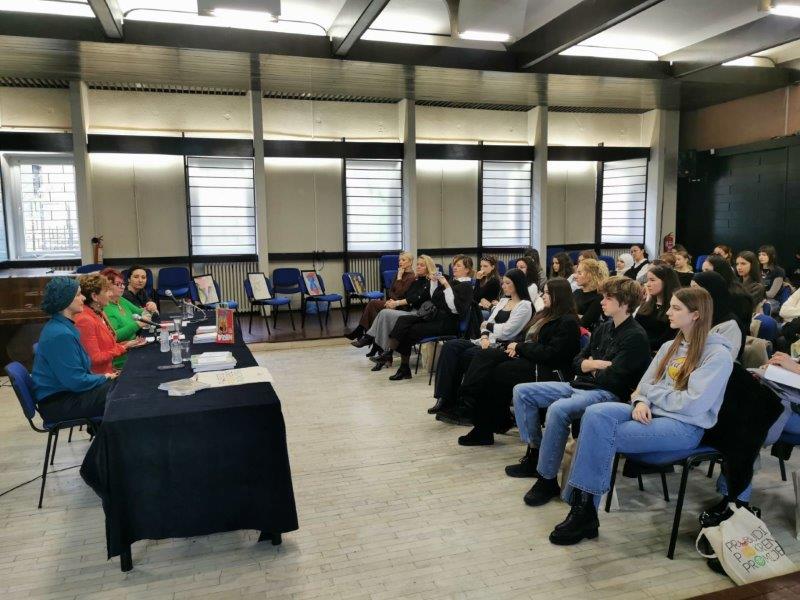
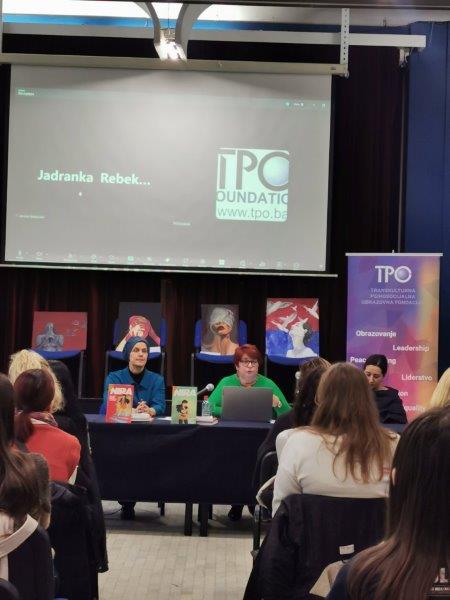
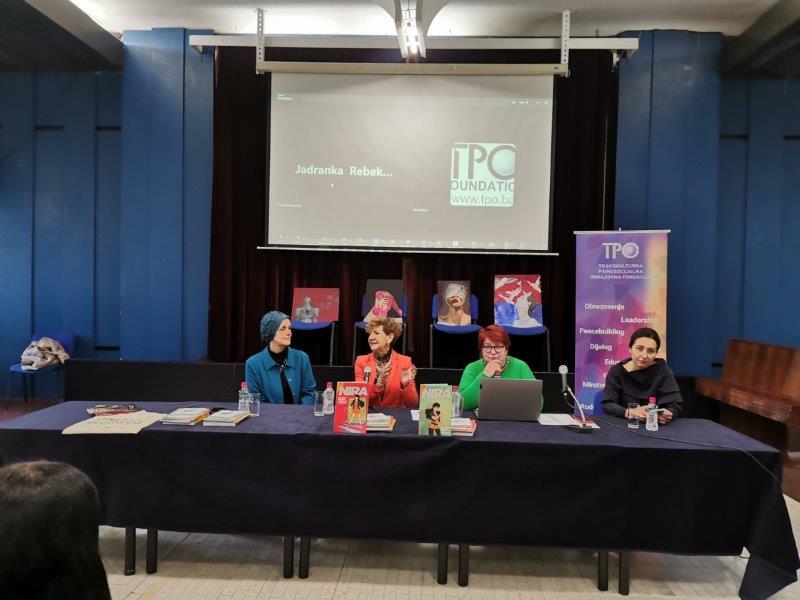
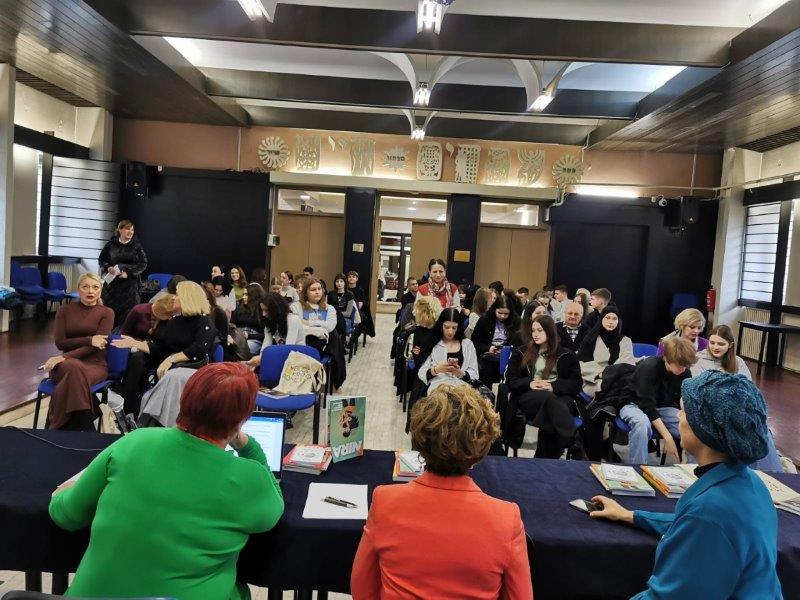
The panel “Gender, Religion, and Gender-Based Violence” brought together three experts—Dr. Jadranka Rebeka Anić, Dr. Medina Mujić, and MSc Elma Softić-Kaunitz—who addressed the topic from Jewish, Christian, and Islamic perspectives. The program was moderated by Prof. Dr. Zilka Spahić Šiljak, and opening remarks were delivered by the President of the Jewish Community, Rahela Džidić.
Speaking about the position of women in Judaism and the ways religious texts are interpreted in contemporary communities, Softić-Kaunitz emphasized that “Silence is never neutral,” and that failing to react to violence means participating in its normalization. She noted that women often face pressure to “stay silent for the sake of peace at home,” and that cultural factors strongly influence religious practices and the legal status of women. She particularly highlighted the issue of divorce in traditional interpretations of Judaism, where in some cases a woman’s status depended on her husband’s consent. She also quoted a Talmudic principle: “A man must honor his wife more than himself.” This ethical principle, she pointed out, is too often lost in contemporary practice. She concluded by stressing that an ideal marital relationship is not hierarchical but a partnership grounded in dignity and mutual respect.
Dr. Jadranka Rebeka Anić spoke about the biblical-theological foundations of gender equality. She emphasized:
- that the radical message of Christianity is rooted in the dignity of every person as God’s creation,
- that Jesus never justified violence and consistently stood with marginalized women through both his actions and his words,
- that biblical texts do not legitimize male domination over women; such ideas stem from cultural interpretations rather than divine command.
“Nowhere is it written that a man is mandated to rule over a woman,” Anić stressed, underscoring the need for religion to be freed from gender stereotypes accumulated through history rather than derived from scripture itself. She reminded attendees of the Gospel message:
“Whatever you did for one of the least of these, you did for me.” Anić explained that the “least of these” today includes minorities, migrants, and women. In every classroom, she emphasized, we must ask who is threatened, excluded, or bullied.
Dr. Medina Mujić analyzed the influence of the three major religious traditions in Bosnia and Herzegovina on the formation of gender roles, stressing that today’s resistance to gender equality cannot be understood separately from religious ideologies, family norms, and political discourse.
She highlighted that:
- anti-gender movements function as transnational and transreligious ideologies fueled by fear, nostalgia, and perceived threat,
- gender is portrayed as a “danger” to identity, the nation, or the family,
- emotional strategies—such as moral panic—are more powerful in mobilizing people than rational argumentation.
She particularly emphasized that in wartime narratives, women are often depicted exclusively as victims or heroines, which overshadows their complex social roles. Dr. Mujić concluded that understanding these mechanisms is crucial because the same patterns of resistance to gender equality appear today in politics, religious discourse, and cultural norms.
Young people on violence and gender stereotypes: art and short films
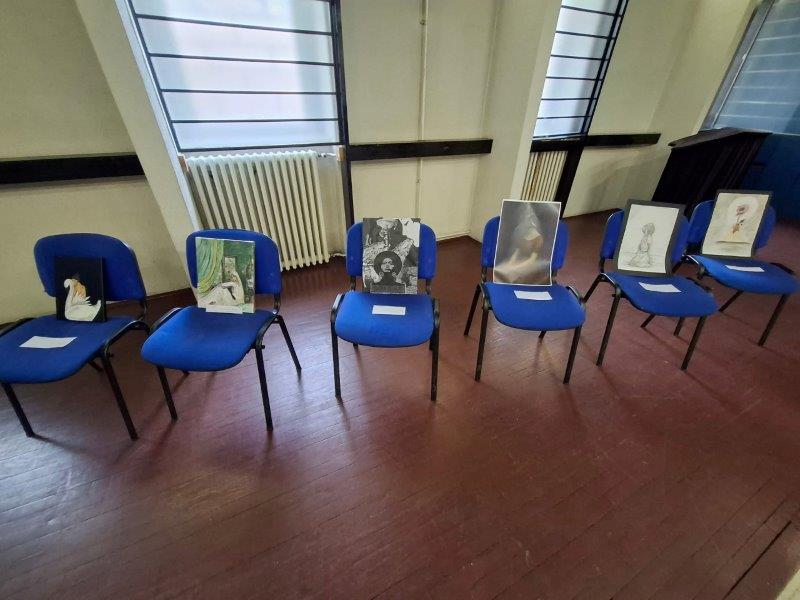
The event also included an exhibition of artwork by students of the Secondary School for Textile, Leather, and Design, and screenings of short films created by students. Among the films, three were selected for awards:
- Eda Pirildar, Second Gymnasium Sarajevo
- Medina Sari Hamidović, Medical High School
- Amina Cibra, Third Gymnasium Sarajevo
The students’ artwork and films explored:
- gender stereotypes,
- emotional and psychological impacts of violence,
- the importance of tolerance and respect for diversity,
- the role of the community in protecting women.
Young people demonstrated remarkable maturity in understanding violence as a societal, not merely private, issue.
A shared message: from silence to responsibility
The panel concluded with a unified message from all speakers:
Violence is not a private matter, and silence sustains it.
Religious communities, educational institutions, families, and society as a whole must take an active role in preventing violence, dismantling harmful stereotypes, and building gender-equal relationships grounded in dignity and respect.
The commemoration of Human Rights Day at the Jewish Community of Sarajevo thus became a powerful space for dialogue on faith, knowledge, and responsibility at a time when violence and discrimination continue to be normalized through a culture of silence and ideological manipulation.
